In this story
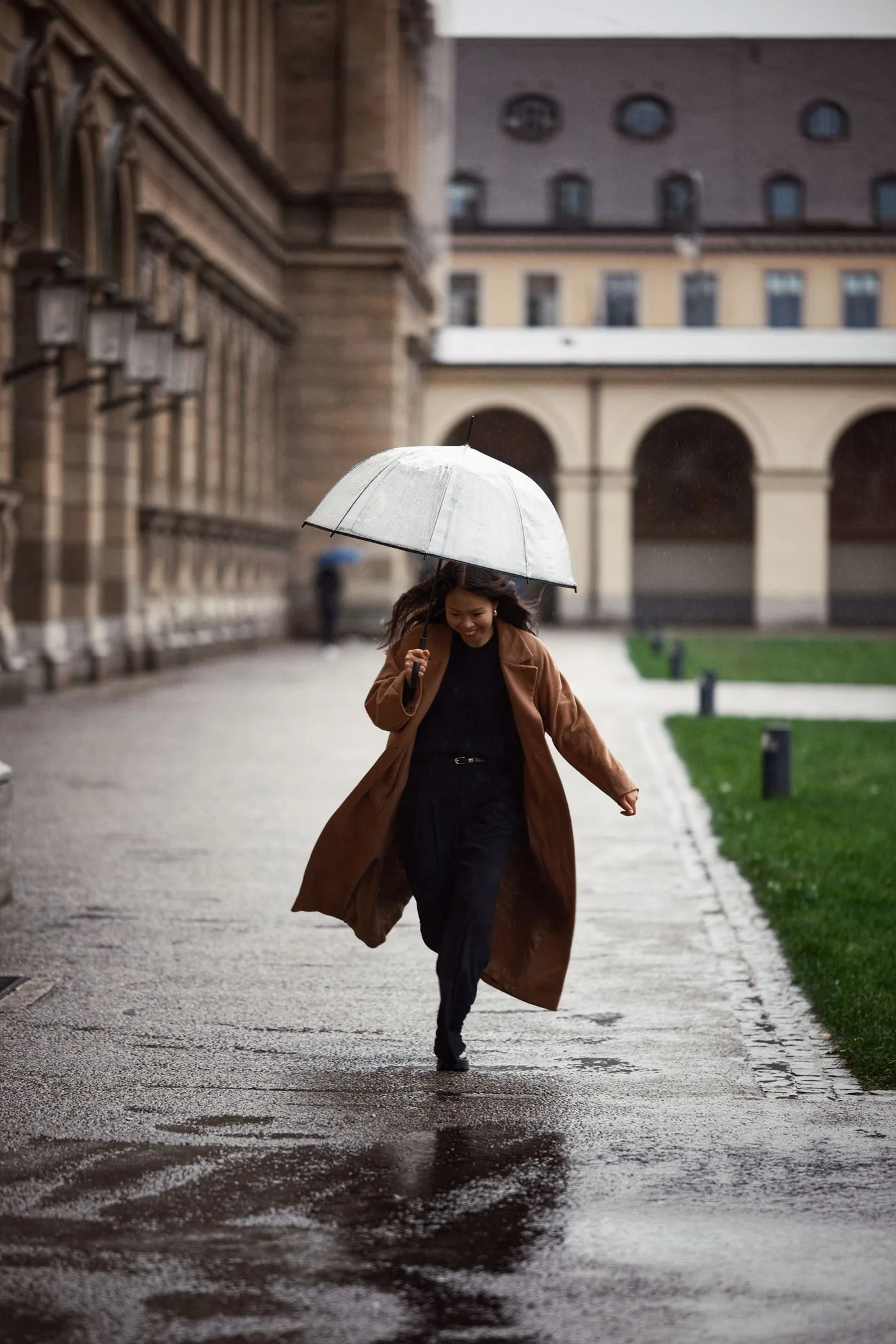
A rainy city day can include a station staircase, a crowded museum entrance and a café chair with very little room for a wet coat. Dressing for it is a matter of managing damp fabric as much as looking good in a trench. Build from the ground upward, because water at your feet will shape the rest of the day more than the color of your scarf.
Keep the pavement away from your clothes
A trouser hem that brushes the ground indoors is likely to pick up moisture outdoors. Try a shorter length or turn up a suitable pair before departure, checking that the cuff remains comfortable and secure. If you prefer a skirt, consider how it behaves in wind and whether you can climb steps without gathering a large amount of fabric. Long does not always mean impractical, but dragging fabric is rarely helpful.
Choose socks and shoes together, leaving space for movement. A boot that feels acceptable with thin socks may become tight with the pair you actually intend to wear. Check the sole condition of shoes you own. A familiar upper does not compensate for a worn, smooth outsole. No fashion article can guarantee grip, so treat wet surfaces with care regardless of the label on your footwear.
Understand what the coat promises
Water-resistant and waterproof are different product claims; read the maker’s specific description rather than assuming a trench-style silhouette gives rain protection. Look for information about seams, closures and any required care. A coat can be excellent for light showers yet unsuitable for extended heavy rain. Match the purchase to how much time you realistically expect to spend outside.
Try the coat with your actual middle layer. Can you reach forward, carry a bag and raise an umbrella without pulling the shoulders tight? A high collar or hood is useful only if it feels comfortable around your face. Decide whether you need weather coverage or simply a polished outer layer, then avoid paying for technical details that your plans do not require.
Plan the indoor handover
Wet outerwear has to go somewhere. A coat that can fold without becoming unwieldy may be easier in a small café than a very structured version. If you carry an umbrella, think about how you will contain it when folded. A simple sleeve or washable pouch can help keep a damp canopy away from paper, electronics and clothing, although it should be opened to dry afterward.
Keep your bag positioned where you can manage its closures with one hand. An umbrella, shopping bag and open tote quickly become an awkward combination. Our crossbody buying guide considers useful access and strap choices. Avoid assuming a zip makes a bag waterproof; material and construction still matter.
Make the outfit feel intentional
Repeating one tone in your shoes, bag or coat creates continuity when the outfit is mostly covered. A lighter shirt near the face can lift dark outerwear, while a small scarf offers color without demanding suitcase space. Choose accessories that can tolerate ordinary handling. This is not the moment for a delicate bag that requires continuous protection from the weather.
If rain is an occasional possibility, begin with what you own and adjust your route to include indoor breaks. A dedicated rain wardrobe is more useful for frequent outdoor exposure than a single short weekend with flexible plans. For changing temperatures beyond the showers, consult shoulder-season layering and choose pieces that work together.
Wet-weather questions
Are leather shoes always unsuitable? It depends on the particular leather, finish, construction and care guidance. Read the maker’s instructions and avoid making assumptions based on appearance alone.
Is a large umbrella better? It offers more coverage but takes more space and can be awkward in crowds. Consider your route and your ability to manage it alongside luggage.
What should you leave behind? Floor-length hems, shoes that are already uncomfortable, and accessories so precious that a change in weather would dominate the day.
KEEP READING
Browse the complete Lady Trekking journal →